Managing receipts is a routine part of financial operations for businesses of all sizes. From employee reimbursements to travel expenses and vendor purchases, organizations generate a large number of receipts every month. When these receipts are processed manually, the process becomes time-consuming, error-prone, and difficult to scale.
This is where Receipt OCR (Optical Character Recognition) plays a crucial role. By automatically extracting key information from receipts, OCR technology simplifies expense tracking and helps businesses build faster, more reliable financial workflows.
What is Receipt OCR and How It Automates Expense Management, which explains how OCR converts receipt images into structured digital data.
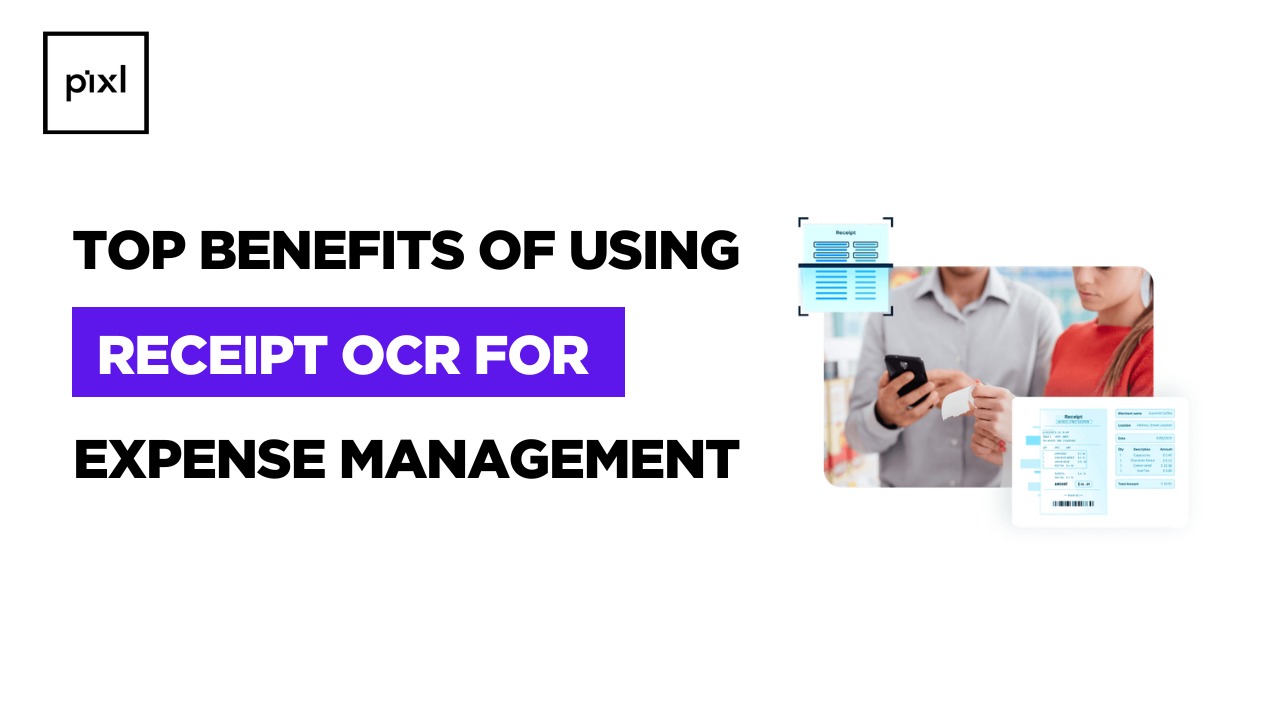
In this article, we’ll explore the top benefits of using receipt OCR for expense management and why businesses are increasingly adopting this automation technology.
1. Faster Expense Processing
Manual receipt processing often involves multiple steps:
- Collecting physical receipts
- Entering receipt data manually
- Verifying transaction details
- Recording expenses in accounting systems
This entire workflow can take several minutes for each receipt.
With receipt OCR, businesses can process receipts in seconds. The system automatically scans the receipt, recognizes the text, and extracts important information such as the merchant name, transaction date, tax amount, and total cost.
This automation dramatically reduces the time required for expense entry, allowing finance teams to focus on more strategic tasks rather than repetitive data entry.
2. Reduced Manual Data Entry
One of the biggest challenges in expense management is manual data entry. Finance teams often spend hours entering receipt details into spreadsheets or accounting software.
Receipt OCR eliminates this problem by automatically capturing receipt data and converting it into digital records.
Instead of typing information manually, employees simply upload a receipt image or PDF, and the system extracts the relevant details instantly.
This not only improves efficiency but also reduces the workload for accounting and finance departments.
3. Improved Accuracy in Financial Records
Manual entry increases the risk of errors such as:
- Incorrect amounts
- Missing tax values
- Wrong transaction dates
- Duplicate entries
These errors can affect financial reporting and create problems during audits.
Receipt OCR significantly improves data accuracy by using advanced text recognition algorithms to capture receipt information correctly.
How Receipt OCR Improves Accuracy in Financial Recordkeeping, where we explore how automated extraction helps businesses maintain reliable accounting records.
4. Simplified Employee Expense Management
Employees often submit receipts for reimbursements related to travel, meals, or business purchases. When these receipts are handled manually, reimbursement processes can become slow and frustrating.
With receipt OCR, employees can simply upload receipts through a mobile app or expense management platform. The system automatically extracts the receipt details and records the expense.
This makes the reimbursement process much faster and improves the overall employee experience.
5. Better Financial Visibility
When receipts are digitized and stored in a structured format, businesses gain better visibility into their spending patterns.
Receipt OCR allows companies to:
- Track expenses in real time
- Categorize spending automatically
- Generate accurate financial reports
- Monitor departmental budgets
This level of visibility helps management teams make better financial decisions and control unnecessary expenses.
6. Paperless Expense Management
Traditional receipt handling requires storing physical documents, which can create storage and organization challenges.
Receipt OCR supports digital receipt processing, allowing businesses to store all receipts electronically.
This not only reduces paper usage but also makes it easier to search, retrieve, and manage financial records when needed.
Digital records also help organizations maintain proper documentation for tax compliance and audits.
7. Faster Auditing and Compliance
Accurate and well-organized financial records are essential for audits and regulatory compliance.
Receipt OCR ensures that every receipt is:
- Digitally recorded
- Properly categorized
- Easily accessible
When auditors need supporting documentation, businesses can quickly retrieve receipt data without sorting through piles of physical paperwork.
Automation also reduces the risk of missing or misplaced receipts.
8. Scalable Expense Management for Growing Businesses
As businesses grow, the volume of receipts increases significantly. Manual processing becomes inefficient and unsustainable at scale.
Receipt OCR allows organizations to process thousands of receipts automatically, making it easier to handle high volumes of financial data without increasing administrative workload.
This scalability makes OCR technology especially valuable for companies with frequent transactions or large employee travel expenses.
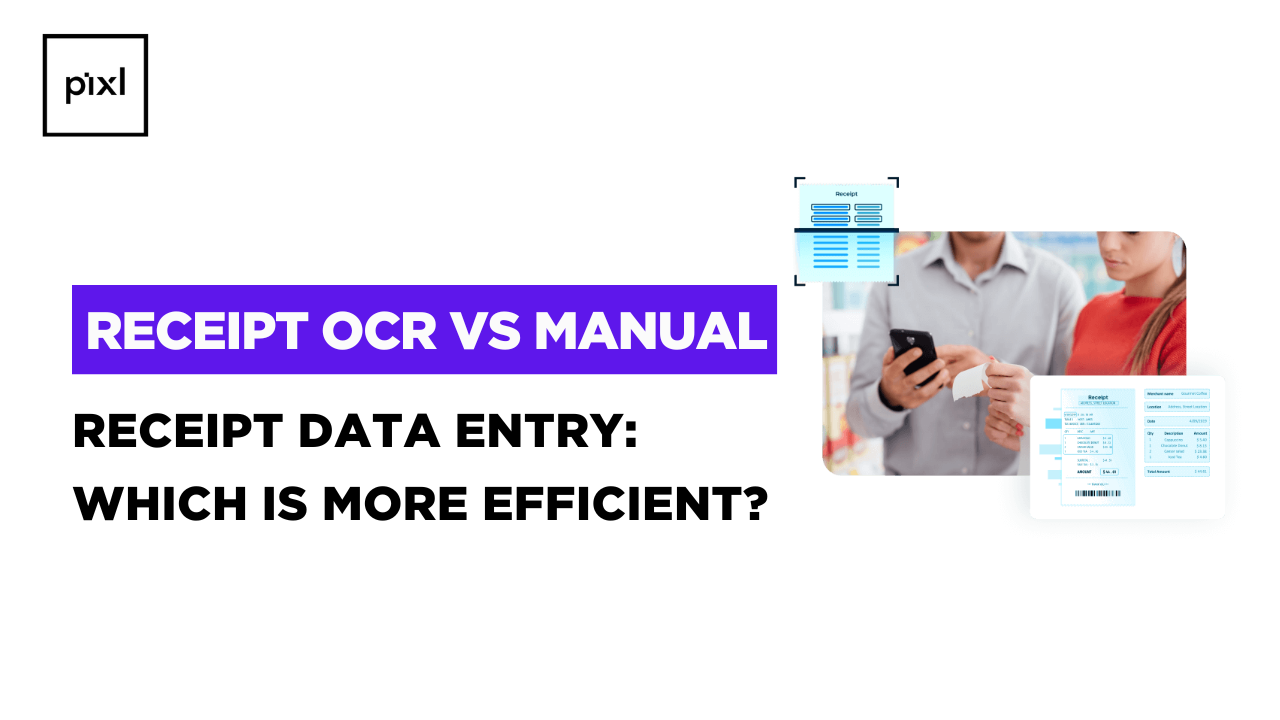
For businesses evaluating whether to move from manual expense tracking to automation, the comparison in Receipt OCR vs Manual Expense Entry: Which is Better for Businesses? explains the key differences between traditional and automated approaches.
The Growing Importance of Receipt OCR in Modern Finance
Modern businesses are increasingly adopting automation tools to improve financial efficiency. Receipt OCR is becoming a core technology in expense management systems because it helps companies:
- Reduce operational costs
- Improve financial accuracy
- Accelerate expense processing
- Maintain better compliance records
By replacing manual workflows with intelligent automation, organizations can streamline financial operations and build more efficient accounting processes.
Conclusion
Receipt OCR is transforming the way businesses manage expenses. By automatically extracting key information from receipts, OCR technology eliminates manual data entry, reduces errors, and speeds up financial workflows.
From employee reimbursements to corporate expense tracking, receipt OCR enables organizations to process receipts faster while maintaining accurate financial records.
As businesses continue to adopt digital finance tools, receipt OCR will play an increasingly important role in building smarter and more efficient expense management systems.