As digital onboarding becomes the norm across banking, fintech, travel, and cross-border services, passport verification technologies have evolved into mission-critical infrastructure. Accurate passport data extraction is no longer just about reading text it’s about enabling secure identity verification, preventing fraud, ensuring regulatory compliance, and delivering seamless customer experiences.
Software Development Kits (SDKs) for passport verification help businesses integrate document recognition directly into mobile apps, web platforms, and enterprise systems. Among the leading solutions in this space are the Regula Passport SDK and the Pixl.ai Passport SDK.
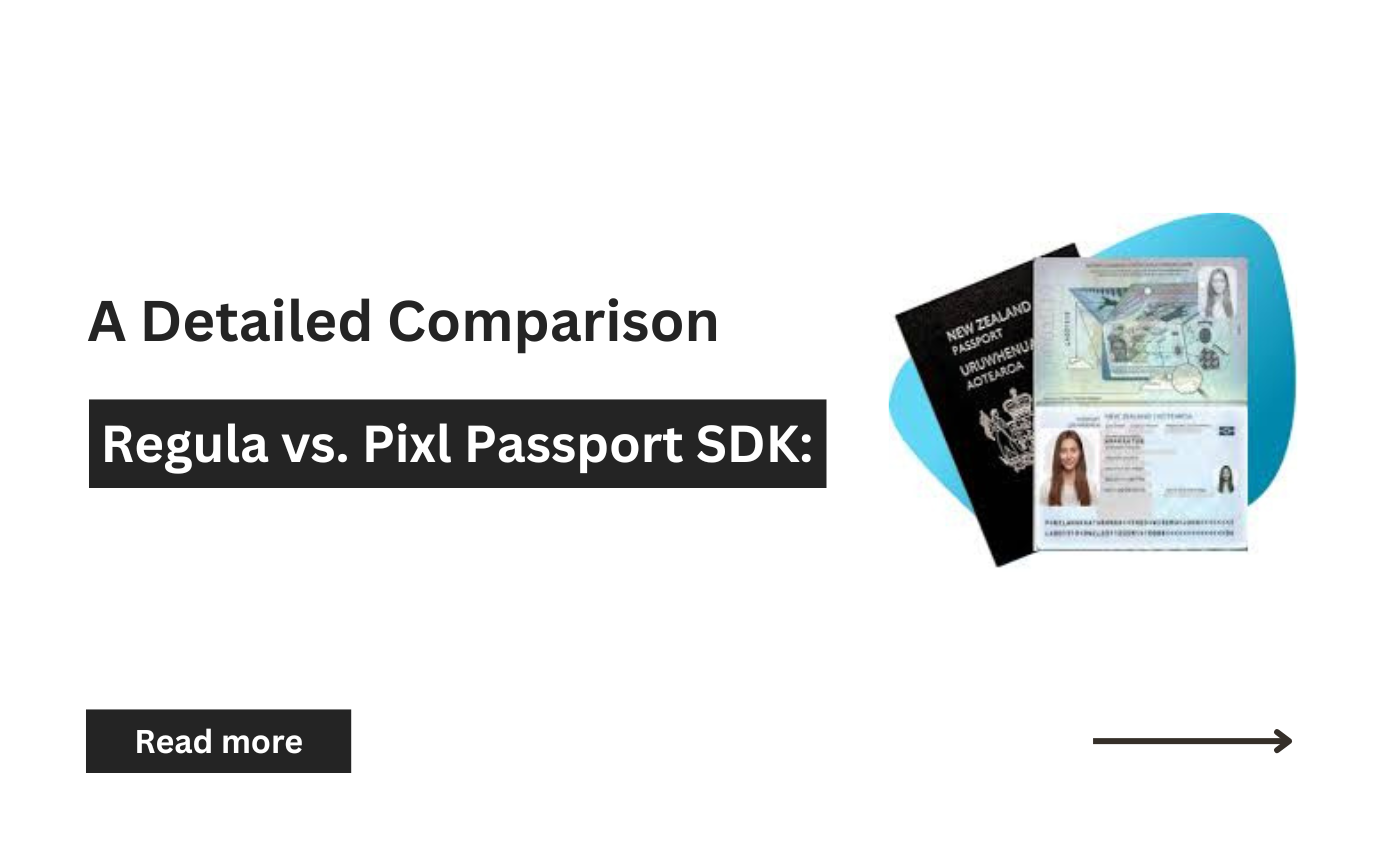
This article provides a detailed comparison to help organizations evaluate which solution best aligns with their performance, scalability, and integration needs.
Overview of Regula Passport SDK
Key Features and Capabilities
- OCR-based data extraction from passports
- Machine Readable Zone (MRZ) reading
- Document authenticity checks
- Support for a wide range of global identity documents
- On-device and server-based processing options
Regula emphasizes deep document verification, including security feature analysis, which is particularly useful in high-risk identity environments.
Target Audience and Use Cases
Regula is commonly used by:
- Government agencies
- Border control authorities
- Banks and financial institutions
- Travel and aviation companies
Its strong forensic and authentication capabilities make it suitable for organizations that prioritize document validation and fraud detection at a granular level.
Overview of Pixl.ai Passport SDK
Core Features and Capabilities
The Pixl Passport SDK is designed for fast, scalable, and AI-powered passport data extraction, particularly in digital onboarding and remote verification workflows.
Key highlights include:
- Support for passports from over 130 countries
- Data extraction in under 5 seconds
- High-accuracy OCR with intelligent field validation
- MRZ recognition and structured data formatting
- Mobile and web SDK compatibility
- API-based integration for enterprise systems
Pixl focuses on delivering speed, accuracy, and seamless integration, making it highly suitable for remote eKYC and Video KYC environments.
- AI-powered image enhancement for low-quality captures
- Real-time data extraction for live onboarding sessions
- Optimized SDK for lightweight mobile integration
- Scalable architecture for high-volume processing
Pixl’s approach prioritizes rapid deployment and frictionless customer onboarding while maintaining strong compliance standards.
Feature Comparison
Data Extraction Capabilities
- Regula: Strong document reading combined with authentication and forensic checks.
- Pixl: High-speed structured data extraction optimized for digital workflows and automated onboarding.
Recognition Speed and Accuracy
- Regula: Known for reliability and deep validation processes.
- Pixl: Extracts passport data in under 5 seconds with high recognition accuracy, optimized for real-time use cases.
Supported Document Types
- Regula: Broad coverage across identity documents globally.
- Pixl: Supports passports from 130+ countries, tailored for scalable global onboarding.
Ease of Systems Integration
- Regula: Enterprise-focused integration with advanced verification layers.
- Pixl: Lightweight SDK and API-first design for faster deployment into mobile apps and digital platforms.
User Interface Design
- Regula: Geared toward detailed inspection and verification environments.
- Pixl: Designed for smooth end-user capture experience in mobile and remote onboarding scenarios.
Performance Analysis
When comparing performance:
- Speed: Pixl stands out with sub-5-second extraction, ideal for real-time onboarding flows.
- Accuracy: Both solutions deliver high accuracy, but Pixl emphasizes optimized OCR for rapid digital verification.
- Reliability: Regula’s strength lies in document authentication depth, while Pixl focuses on consistent high-volume processing performance.
For businesses handling large volumes of remote identity verifications, processing speed combined with accuracy becomes a decisive factor.
Use Cases and Applications
Common Industries Using Both SDKs
- Banking and Financial Services
- Fintech Platforms
- Travel & Aviation
- Immigration & Border Management
Where Pixl’s Versatility Stands Out?
Pixl Passport SDK is particularly effective in:
- Remote eKYC onboarding
- Video KYC workflows
- Digital wallet registrations
- Cross-border fintech services
- High-volume mobile app integrations
Its fast processing and scalable architecture make it well-suited for digital-first businesses focused on growth and customer experience.
Conclusion
Both Regula and Pixl Passport SDK offer robust passport verification capabilities, but their strengths differ based on business needs.
- Regula excels in deep document authentication and forensic-level validation.
- Pixl Passport SDK stands out for its speed, scalability, global passport coverage (130+ countries), and seamless integration into digital onboarding workflows.
For organizations focused on remote eKYC, Video KYC, and large-scale digital onboarding, Pixl offers a compelling combination of rapid data extraction, enterprise-grade performance, and cost-effective scalability.
As digital identity verification continues to evolve, selecting the right SDK depends on whether your priority is forensic-level document inspection or fast, AI-powered passport verification optimized for modern digital ecosystems.