As financial services move rapidly toward digital-first onboarding, the risks associated with identity fraud have grown just as fast. Traditional verification methods are no longer sufficient in a world where fraudsters use synthetic identities, stolen documents, and even AI-generated deepfake videos.
This is where Video KYC (vKYC / V-CIP) has emerged as a critical defense layer combining human verification with AI-driven intelligence to protect institutions and customers alike.
The Rising Importance of Video KYC in Financial Services
Video KYC enables banks and NBFCs to verify customer identities remotely through a secure, regulator-approved video interaction. It replaces physical branch visits while maintaining compliance with KYC, AML, and customer identification regulations.Beyond convenience, Video KYC plays a much larger role today: preventing sophisticated digital identity fraud while enabling fast, scalable onboarding.
Understanding Identity Fraud and Its Impact
Identity fraud occurs when criminals use stolen, forged, or synthetic identities to gain unauthorized access to financial services. This includes:
- Opening accounts using fake or stolen documents
- Applying for loans under false identities
- Laundering money through mule accounts
- Taking over legitimate customer accounts
For banks and customers, the consequences are severe:
- Financial losses and chargebacks
- Regulatory penalties and compliance risks
- Erosion of customer trust
- Long-term reputational damage
As fraud techniques evolve, static verification methods struggle to keep pace.
To know more about VKYC Read our latest blog: Best Video KYC Solution for Banks and NBFCs: Why Pixl.ai Leads the Way
Deepfake Technology: A New Threat to Digital Onboarding
Deepfake technology uses AI-generated audio and video to impersonate real individuals with alarming accuracy. In the context of identity verification, deepfakes pose serious risks:
- Fake video calls mimicking real customers
- Manipulated facial movements during verification
- Synthetic identities passing basic document checks
Without advanced detection mechanisms, deepfakes can bypass traditional selfie-based or document-only KYC processes.
How Video KYC Combats Identity Fraud?
Modern Video KYC platforms are designed with multi-layered security controls that significantly raise the bar for fraudsters.
Key Fraud Prevention Mechanisms:
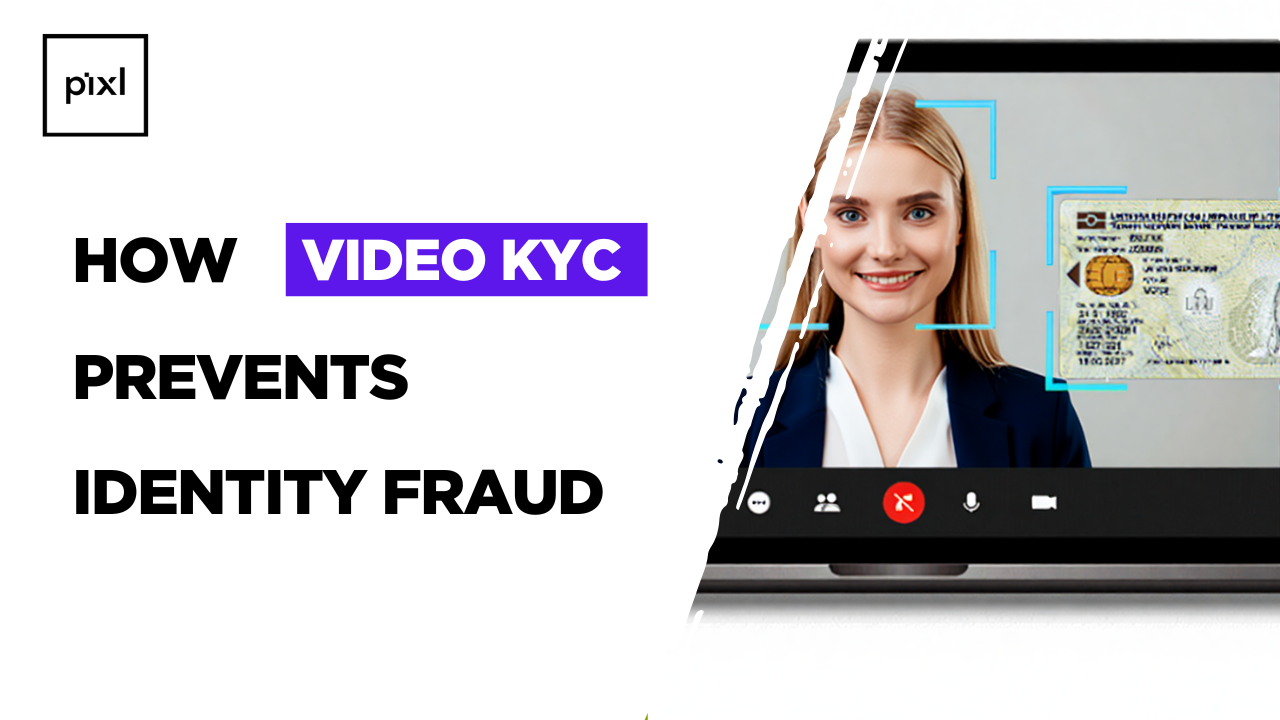
- Live Video Interaction: Confirms real-time human presence
- Document Authenticity Checks: Validates ID formats, fonts, and security features
- OCR-Based Data Extraction: Eliminates manual data tampering
- Biometric Face Match: Compares live face with document photo
- Liveness Detection: Detects spoofing attempts using photos or videos
By cross-verifying identity across multiple data points, Video KYC ensures that no single signal can be exploited.
AI and Machine Learning in Deepfake Detection
Advanced Video KYC platforms use AI and machine learning models trained to detect deepfake attempts during live sessions.
AI Capabilities Include:
- Detecting unnatural facial movements and micro-expressions
- Identifying frame inconsistencies and image artifacts
- Analyzing eye movement, blink patterns, and depth cues
- Monitoring audio-video synchronization anomalies
- Scoring liveness confidence in real time
These AI-driven checks enable institutions to detect deepfake videos instantly, even as fraud tactics evolve.
Real-World Success Stories in Fraud Prevention
Many banks and NBFCs have successfully deployed Video KYC to strengthen fraud controls:
- Retail banks reduced fake account openings by combining document OCR with live face verification
- Digital lenders blocked synthetic identity fraud using AI-based liveness and risk scoring
- Fintech platforms improved onboarding speed while lowering fraud losses through automated Video KYC workflows
In each case, institutions achieved better compliance, faster onboarding, and measurable fraud reduction.
The Future of Video KYC in Secure Banking
As identity fraud becomes more AI-driven, Video KYC will continue to evolve with:
- Advanced deepfake detection models
- Continuous behavioral analysis
- Risk-based onboarding decisions
- Seamless integration with fraud and AML systems
- Adaptive compliance aligned with regulatory changes
Video KYC will move beyond onboarding to become a core pillar of digital trust across the customer lifecycle.
Conclusion: Video KYC as a Shield Against Digital Identity Threats
In today’s digital banking environment, identity fraud and deepfake attacks are no longer theoretical risks they are active threats. Video KYC provides a powerful, future-ready solution by combining live verification, biometrics, AI intelligence, and document validation.
For banks and NBFCs, adopting a robust Video KYC framework is not just about compliance it is about protecting customers, safeguarding revenue, and building long-term trust in a digital-first world.
Video KYC stands as one of the most effective defenses against identity fraud in the age of AI.