Video KYC has shifted from a regulatory requirement to a brand-defining customer experience. At the heart of this evolution lies liveness detection, the critical technology that distinguishes a real human presence from increasingly sophisticated fraud attempts. As digital onboarding becomes the default across banking, fintech, insurance, and telecom,
By 2026, liveness detection will no longer be a standalone security check. It will become an intelligent, adaptive, and invisible layer embedded deeply into Video KYC workflows.
Lets dive deeper in to real insights of liveness detection enabled vkyc and its importance here.
Introduction to Video KYC and Liveness Detection
Video KYC enables businesses to verify customer identities through secure, live video interactions instead of physical visits. It combines human verification with AI-powered checks to meet regulatory standards set by authorities such as RBI and SEBI.
Whats is Liveness detection ?
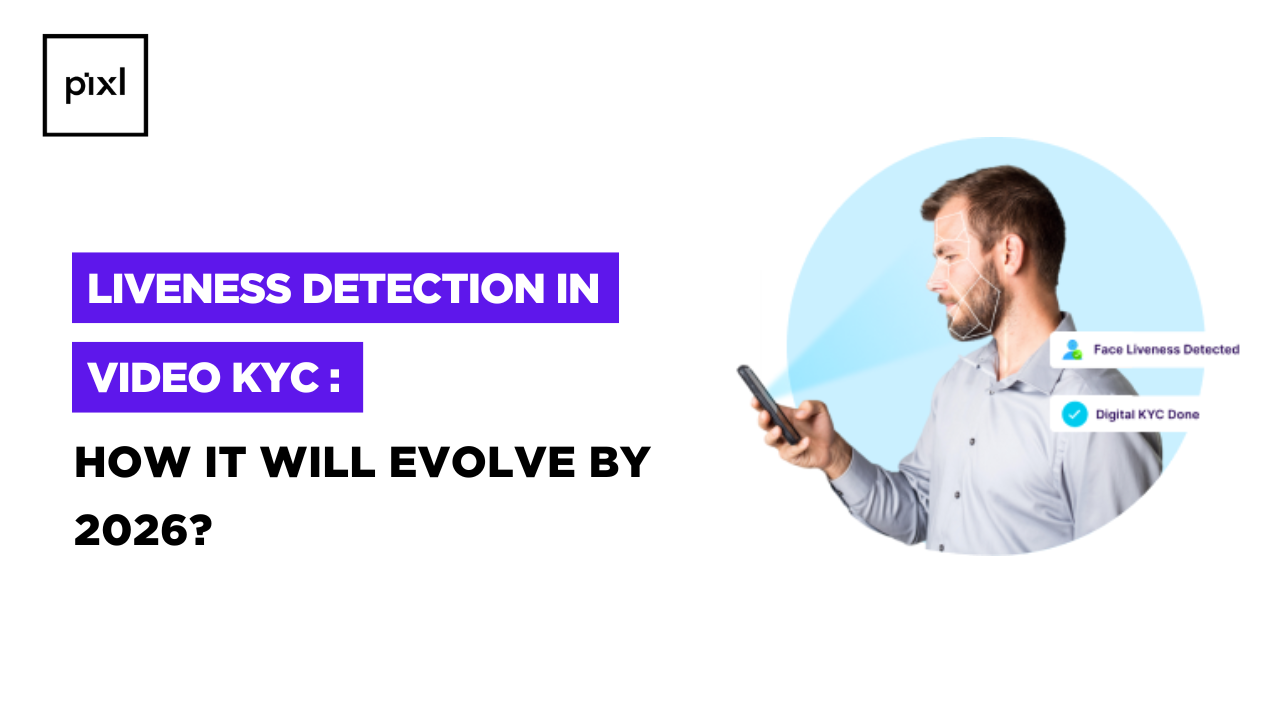
Liveness Detection is a critical security technology in Video KYC that verifies whether a real, live person is present during identity verification. It helps prevent fraud by detecting spoofing attempts such as photos, videos, masks, or deepfake attacks, ensuring only genuine users can complete the KYC process. By combining AI-driven facial analysis and real-time interaction checks, liveness detection strengthens trust, compliance, and security in digital onboarding.
Liveness detection plays a foundational role in this process. Its purpose is simple but critical:
Confirm that the person on the video call is physically present and not a spoof attempt using photos, videos, masks, or deepfakes.
How Liveness Detection Shapes Brand Trust and Customer Experience in Video KYC?
As liveness detection becomes more intelligent, its impact on brand perception will be significant.
What This Means for Brands?
- Faster onboarding without compromising trust
- Lower drop-offs due to reduced friction
- Stronger fraud prevention, protecting brand reputation
- Consistent experiences across devices and geographies
Brands that adopt advanced liveness detection early will position themselves as:
- Secure
- Tech-forward
- Customer-centric
Current Technologies and Practices in Liveness Detection
Today’s liveness detection technologies primarily rely on a mix of active and passive techniques, including:
- Blink, head movement, and gesture-based checks
- Texture and depth analysis to detect printed photos or screens
- Challenge-response mechanisms during live Video KYC sessions
- AI-driven face match validation against officially valid documents
- Replay attack detection to block pre-recorded videos
Pixl.ai integrates these capabilities seamlessly into its Video KYC platform, ensuring:
- Minimal friction for genuine users
- Strong resistance against identity and financial fraud
- Full auditability for compliance teams
However, as fraud techniques evolve especially with AI-generated content traditional liveness methods are reaching their limits.
For more info about How Pixl.ai becomes the leader in VKYC Read :Best Video KYC Solution for Banks and NBFCs: Why Pixl.ai Leads the Way
Know Predictions and Innovations for Liveness Detection by 2026
By 2026, liveness detection will undergo a fundamental transformation, driven by AI, behavioral intelligence, and regulatory expectations.
Key Innovations We Expect:
1. Passive & Continuous Liveness
Instead of explicit user actions, liveness will be assessed continuously through micro-expressions, natural movements, and behavioral cues making verification almost invisible to customers.
2. Deepfake-Resistant AI Models
With synthetic identity fraud rising, liveness detection will incorporate deep learning models trained specifically to detect AI-generated faces, voice sync mismatches, and synthetic video artifacts.
3. Multimodal Liveness Signals
Liveness will move beyond face analysis to include:
- Voice modulation
- Interaction timing
- Device behavior
- Environmental consistency
Pixl.ai is already aligning its roadmap toward multi-layered, AI-driven liveness detection that adapts in real time based on risk signals.
4. Risk-Based Dynamic Verification
Low-risk users will experience near-instant verification, while high-risk cases trigger deeper liveness checks optimizing both security and conversion rates.
Preparing for the Future of KYC
By 2026, liveness detection will define the effectiveness of Video KYC, not just as a fraud-prevention tool, but as a core driver of customer trust and brand differentiation.
The future belongs to platforms that can:
- Detect fraud without disrupting users
- Scale securely across industries
- Evolve continuously with emerging threats
Pixl.ai is building Video KYC solutions for that future today.
For brands looking to stay compliant, competitive, and customer-focused, now is the time to rethink how liveness detection fits into your digital onboarding strategy.