Introduction
In today’s digital-first world, businesses are constantly looking for smarter ways to communicate, engage audiences, and deliver information in real time. Traditional printed signage is no longer enough to meet these expectations.
This is where digital signage platforms powered by streaming technology come into play.
From retail stores and banks to airports and corporate offices, organizations are transforming their communication strategies using smart TV content management and digital display solutions.
In this comprehensive guide, you’ll learn everything you need to know about digital signage, how streaming enhances it, and how modern platforms like StreamNow are redefining content delivery.
What is Digital Signage?
Digital signage is the use of digital screens to display dynamic content, such as:
- Videos
- Images
- Text and scrolling messages
- Real-time updates (news, financial data, alerts)
Unlike traditional static displays, digital signage allows businesses to:
- Update content instantly
- Deliver engaging visuals
- Manage screens remotely
If you’re new to this concept, start with our beginner guide:
“What is Digital Signage and How Does It Work?”
Evolution: From Traditional Displays to Smart Streaming
Traditional Signage
- Printed posters and banners
- Manual updates
- Limited flexibility
Basic Digital Signage
- Preloaded content on screens
- Limited scheduling
- Minimal control
Modern Digital Signage (Streaming-Powered)
- Cloud-based content delivery
- Real-time updates
- Live streaming capabilities
- Centralized control across devices
The shift toward streaming and digital signage integration has enabled businesses to move from static communication to dynamic, real-time engagement.
Key Components of a Digital Signage Platform
A modern digital signage platform consists of three core components:
1. Content
The media you want to display:
- Videos
- Images
- Announcements
- Live streams
2. Content Management System (CMS)
The CMS allows you to:
- Upload and organize content
- Create playlists
- Schedule playback
- Control multiple screens from one dashboard
3. Display Devices
These include:
- Smart TVs (Android TV, Samsung Tizen, LG WebOS)
- Web browsers
- Tablets and digital kiosks
Together, these components create a complete digital display ecosystem.
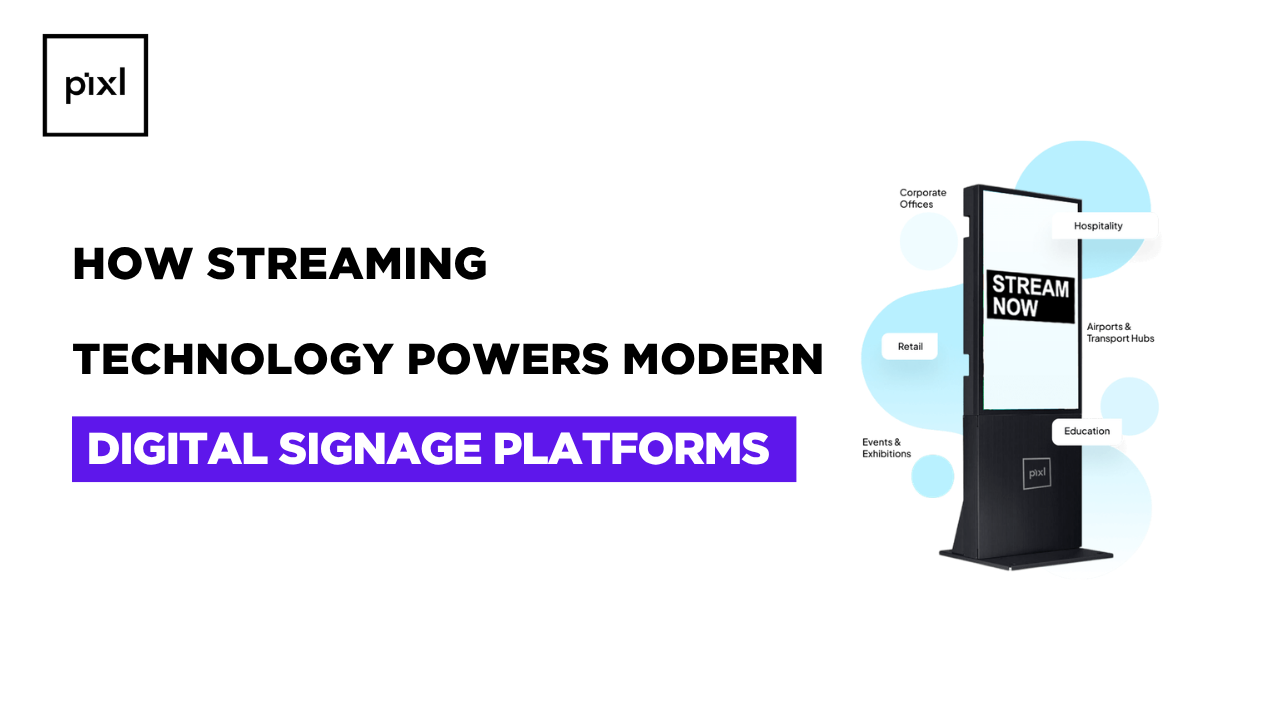
How Streaming Enhances Digital Signage
Streaming technology has transformed digital signage from static playback to real-time content delivery systems.
With streaming, businesses can:
- Deliver content via secure URLs
- Broadcast live events
- Update screens instantly across locations
- Reduce dependency on local storage
Learn more in detail:
“How Streaming Technology Powers Modern Digital Signage Platforms.”
Common Challenges in Content Display Management
Despite its advantages, managing digital signage can be complex without the right platform.
Common Challenges:
- Manual content updates
- Lack of centralized control
- Device compatibility issues
- Limited scalability
- No live streaming capabilities
- Inconsistent content across locations
These challenges can lead to inefficiencies and poor user experience.
Explore solutions here:
Challenges in Managing Digital Displays and How to Solve Them.
Features to Look for in a Digital Signage Platform
Choosing the right platform is critical for success.
Key Features Include:
- Centralized content management
- Playlist creation and automation
- Advanced scheduling
- Real-time monitoring and control
- Cross-platform compatibility
- Live streaming support (RTMP & HLS)
- Secure content delivery
- Geo-targeting and personalization
These features ensure your digital signage system is scalable, efficient, and future-ready.
Read the full breakdown here:
“Key Features to Look for in a Digital Signage Software.”
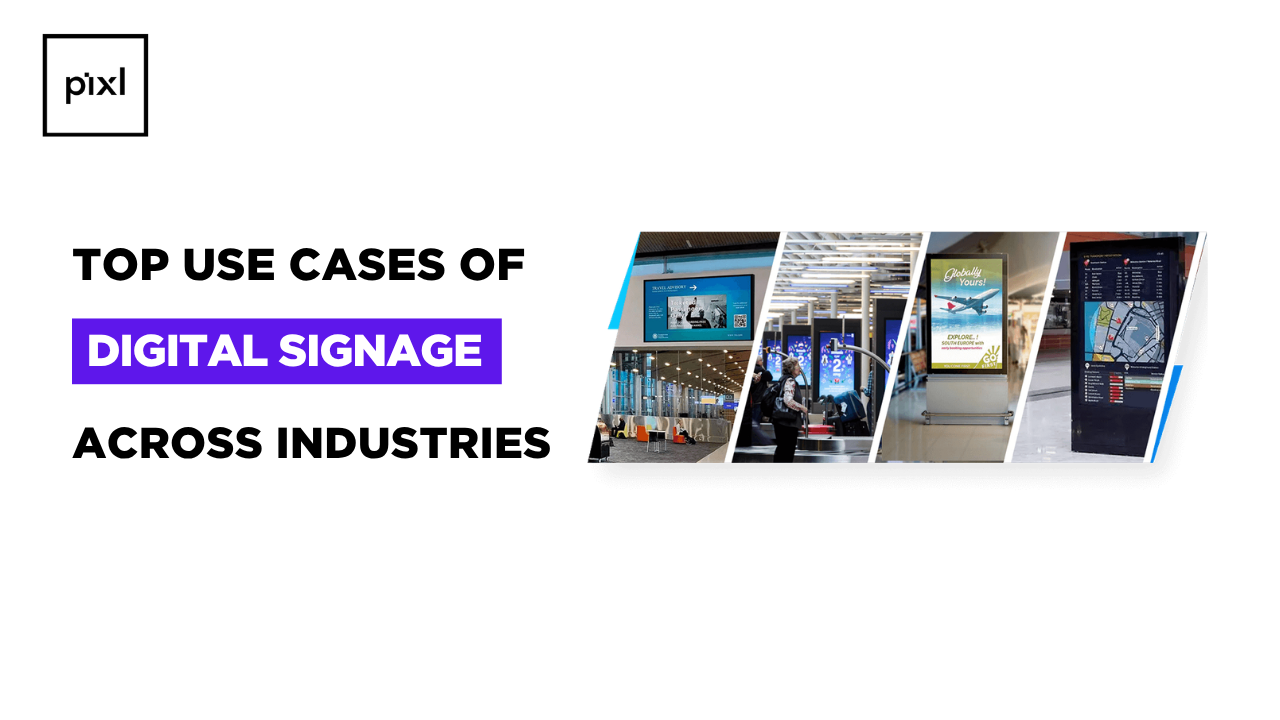
Use Cases Across Industries
Digital signage is widely used across industries to improve communication and engagement.
Retail
- Promotions and product displays
Banking & Finance
- Interest rates, queue systems, financial updates
Corporate Offices
- Internal communication and dashboards
Airports & Transport
- Schedules, alerts, and navigation
Hospitality
- Menus, events, and guest engagement
Education
- Announcements and lecture streaming
Explore all use cases here:
Top Use Cases of Digital Signage Across Industries.
How StreamNow Simplifies Digital Signage & Streaming
Modern platforms like StreamNow bring together all the essential capabilities required for efficient digital signage and streaming.
Key Advantages:
- Centralized content management across devices
- Real-time updates and control
- Streaming via URL, CDN, and live feeds
- Automated scheduling and playlists
- Cross-platform compatibility (Android TV, Tizen, WebOS, browsers)
- Secure and scalable infrastructure
StreamNow transforms digital signage into a fully automated, intelligent content delivery system, enabling businesses to manage content with precision and ease.
Future Trends in Smart Display Technology
The future of digital signage is being shaped by rapid technological advancements.
Key Trends:
- AI-driven content personalization
- Increased use of live streaming
- Integration with IoT devices
- Data-driven content optimization
- Growth of short-form and vertical video content
- Cloud-based and remote management systems
Businesses adopting these trends will gain a competitive advantage in audience engagement and communication.
Conclusion
Digital signage and streaming platforms are transforming how businesses communicate with their audiences.
By combining:
- Dynamic content
- Real-time streaming
- Centralized control
Organizations can create powerful, scalable, and engaging display networks.Whether you’re just starting or looking to upgrade your system, choosing the right digital signage platform is the key to success.