Introduction
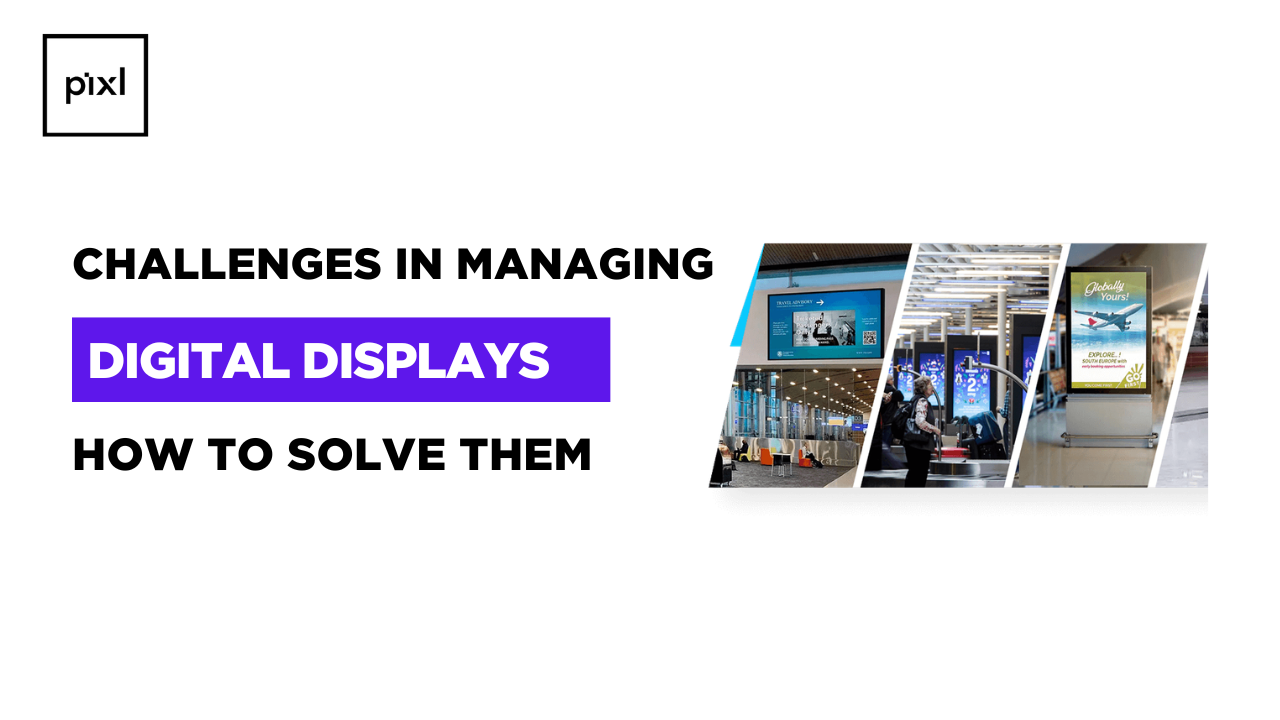
Digital signage has become an essential tool for businesses to communicate, promote, and engage audiences. However, managing multiple digital displays across locations is not always easy.
Many organizations struggle with manual processes, lack of control, and scalability issues, especially when using outdated or basic systems.
In this blog, we’ll explore the common challenges in managing digital displays and how modern digital signage platforms solve them efficiently.
Why Managing Digital Displays is Challenging?
As businesses grow, so does the complexity of managing screens across:
- Multiple locations
- Different device types
- Various content formats
Without the right system, digital signage can quickly become:
- Time-consuming
- Inefficient
- Difficult to scale
If you’re new to how digital signage works, start here:
“What is Digital Signage and How Does It Work?”
1. Challenge: Manual Content Updates
The Problem
Updating content manually on each screen is:
- Time-consuming
- Error-prone
- Not scalable
This becomes a major issue for businesses with multiple displays.
The Solution
A centralized platform allows you to:
- Upload content once
- Push updates to all screens instantly
- Manage everything remotely
2. Challenge: Lack of Centralized Control
The Problem
Many businesses lack a single dashboard to:
- Monitor devices
- Control playback
- Manage content
This leads to inconsistent content across screens.
The Solution
Modern digital signage software provides:
- Centralized dashboards
- Real-time monitoring
- Instant control over all devices
Learn more about these capabilities here:
“Key Features to Look for in a Digital Signage Software.”
3. Challenge: Device Compatibility Issues
The Problem
Different devices run on different platforms:
- Android TV
- Samsung Tizen
- LG WebOS
- Web browsers
Not all signage solutions support all platforms.
The Solution
Choose a platform with cross-platform compatibility, ensuring:
- Smooth performance across devices
- No dependency on specific hardware
- Easy scalability
4. Challenge: No Scheduling or Automation
The Problem
Without automation:
- Content must be updated manually
- Campaigns cannot be scheduled
- Operations become inefficient
The Solution
Advanced platforms offer:
- Time-based scheduling
- Playlist automation
- Auto-launch on device startup
This allows businesses to run signage without constant manual effort.
5. Challenge: Poor Content Synchronization
The Problem
Content may:
- Play at different times on different screens
- Not update uniformly
- Cause inconsistent messaging
The Solution
A modern system ensures:
- Synchronized playback
- Real-time updates across all devices
- Consistent content delivery
6. Challenge: Limited Scalability
The Problem
As businesses grow, managing more screens becomes difficult due to:
- Infrastructure limitations
- Manual processes
- Lack of automation
The Solution
Cloud-based digital signage platforms enable:
- Easy expansion across locations
- Centralized management at scale
- Seamless onboarding of new devices
7. Challenge: No Live Streaming Capabilities
The Problem
Traditional systems cannot:
- Broadcast live events
- Stream real-time updates
- Deliver dynamic content
The Solution
Streaming-enabled platforms support:
- RTMP and HLS streaming
- Live broadcasts
- Real-time communication
Explore this in detail:
“How Streaming Technology Powers Modern Digital Signage Platforms.”
8. Challenge: Security Risks
The Problem
Unsecured systems can lead to:
- Unauthorized access
- Content misuse
- Data breaches
The Solution
Look for platforms with:
- Encrypted streaming
- Secure device access
- Controlled content distribution
Challenge: Inefficient Content Management
The Problem
Managing different types of content manually can be chaotic:
- Videos
- Images
- Announcements
- Live feeds
The Solution
A robust CMS allows:
- Multi-format content support
- Easy playlist creation
- Organized content workflows
10. Challenge: Lack of Insights & Reporting
The Problem
Without analytics, businesses cannot track:
- What content was played
- When it was displayed
- Device performance
The Solution
Advanced platforms provide:
- Playback logs
- Performance tracking
- Reporting for audits and optimization
How Modern Platforms Like StreamNow Solve These Challenges
Modern digital signage platforms address all these challenges by offering:
- Centralized content management
- Real-time device monitoring and control
- Cross-platform compatibility
- Automated scheduling and playlists
- Live streaming capabilities
- Secure and scalable infrastructure
They transform digital signage into a fully automated, efficient, and scalable communication system.
Conclusion
Managing digital displays can be complex but with the right platform, it becomes simple, scalable, and efficient.
By addressing key challenges like:
- Manual updates
- Lack of control
- Poor scalability
- Limited streaming capabilities
Businesses can unlock the full potential of digital signage.