Introduction
Digital signage is no longer limited to advertisements on screens it has evolved into a powerful communication tool used across industries.
From retail stores to airports, businesses are using digital signage to deliver real-time information, targeted content, and engaging visual experiences.
In this blog, we’ll explore the top use cases of digital signage across industries and how organizations are leveraging it to improve communication, efficiency, and customer engagement.
Why Digital Signage is Gaining Popularity Across Industries?
Modern businesses need:
- Real-time communication
- Centralized control
- Engaging content delivery
- Scalable display solutions
Digital signage addresses all these needs by enabling organizations to:
- Update content instantly
- Manage multiple screens remotely
- Automate content scheduling
If you’re new to digital signage, start here:
“What is Digital Signage and How Does It Work?”
1. Retail: Promotions, Advertising & In-Store Engagement
Retail is one of the biggest adopters of digital signage.
Key Use Cases:
- Display promotional offers and discounts
- Showcase product videos
- Highlight seasonal campaigns
- Run brand advertisements
Benefits:
- Increases customer engagement
- Drives impulse purchases
- Enhances in-store experience
Digital signage allows retailers to update campaigns instantly across multiple locations.
2. Banking & Financial Services: Real-Time Information & Customer Communication
Banks and financial institutions use digital signage for:
- Displaying interest rates and offers
- Showing token/queue information
- Broadcasting financial updates (e.g., gold rates)
- Promoting financial products
Benefits:
- Improves customer experience
- Reduces perceived wait times
- Enables real-time communication
3. Corporate Offices: Internal Communication & Productivity
In corporate environments, digital signage is used to:
- Share company announcements
- Display KPIs and dashboards
- Communicate internal updates
- Stream training content
Benefits:
- Improves employee communication
- Keeps teams aligned
- Enhances workplace engagement
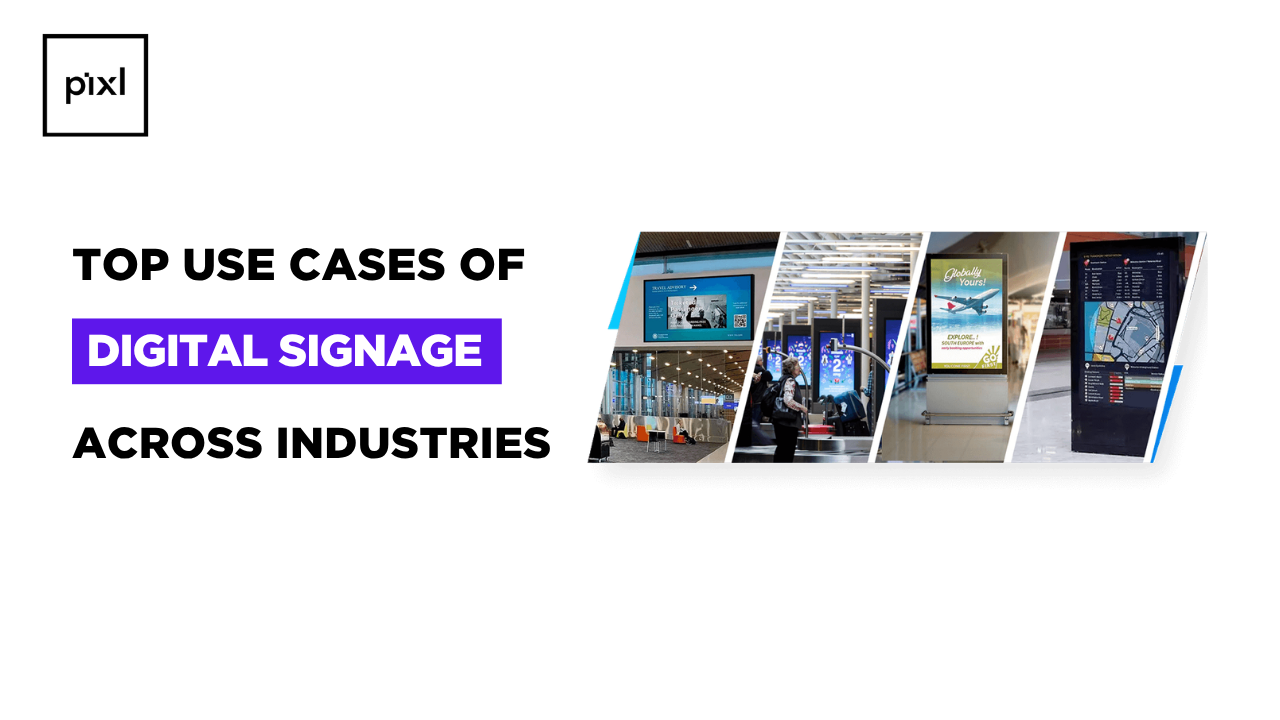
4. Airports & Transport Hubs: Real-Time Updates at Scale
Airports and transport hubs rely heavily on digital signage.
Key Use Cases:
- Flight schedules and updates
- Gate changes and alerts
- Passenger information systems
- Advertising displays
Benefits
- Delivers real-time information
- Reduces confusion
- Enhances passenger experience
5. Hospitality: Guest Engagement & Experience Enhancement
Hotels, restaurants, and hospitality businesses use digital signage for:
- Digital menus
- Event promotions
- Welcome screens
- Wayfinding and directions
Benefits:
- Improves guest experience
- Enables quick updates
- Enhances brand perception
6. Education: Communication & Learning
Educational institutions are adopting digital signage for:
- Campus announcements
- Event updates
- Lecture streaming
- Emergency alerts
Benefits:
- Improves communication across campus
- Supports hybrid learning
- Keeps students informed in real time
7. Events & Exhibitions: Live Content & Audience Engagement
Digital signage plays a crucial role in events.
Key Use Cases:
- Live streaming sessions
- Displaying schedules
- Sponsor promotions
- Interactive content
Benefits
- Enhances audience engagement
- Enables real-time updates
- Improves event experience
8. Healthcare: Patient Communication & Information Display
Hospitals and clinics use digital signage for:
- Patient queue management
- Health awareness content
- Appointment updates
- Navigation assistance
Benefits:
- Improves patient experience
- Reduces confusion
- Streamlines communication
How Digital Signage Supports Multi-Location Businesses?
For organizations with multiple branches, digital signage enables:
- Centralized content control
- Region-based content targeting
- Consistent branding across locations
- Scalable deployment
To understand the features that enable this, read:
“Key Features to Look for in a Digital Signage Software.”
The Role of Streaming in Industry Use Cases
Modern use cases are powered by streaming technology, enabling:
- Live broadcasts
- Video streaming via URLs
- Real-time content updates
This is especially useful for:
- Events
- Corporate communications
- Financial updates
- Public information systems
Learn more here:
“How Streaming Technology Powers Modern Digital Signage Platforms.”
Common Challenges Across Industries
Despite its benefits, businesses often face challenges such as:
- Managing multiple screens
- Updating content manually
- Lack of centralized control
- Device compatibility issues
Explore solutions in detail:
“Challenges in Managing Digital Displays and How to Solve Them.”
How Modern Platforms Like StreamNow Enable These Use Cases?
Advanced digital signage platforms make all these use cases possible by offering:
- Centralized content management
- Real-time control and monitoring
- Multi-device compatibility
- Automated scheduling
- Secure streaming capabilities
They allow businesses to deliver the right content, at the right time, on the right screen.
Conclusion
Digital signage is transforming industries by enabling smarter, faster, and more engaging communication.
From retail and banking to airports and education, organizations are using digital signage to:
- Improve customer experience
- Enhance operational efficiency
- Deliver real-time information
As technology continues to evolve, digital signage will become even more essential for businesses looking to stay competitive.