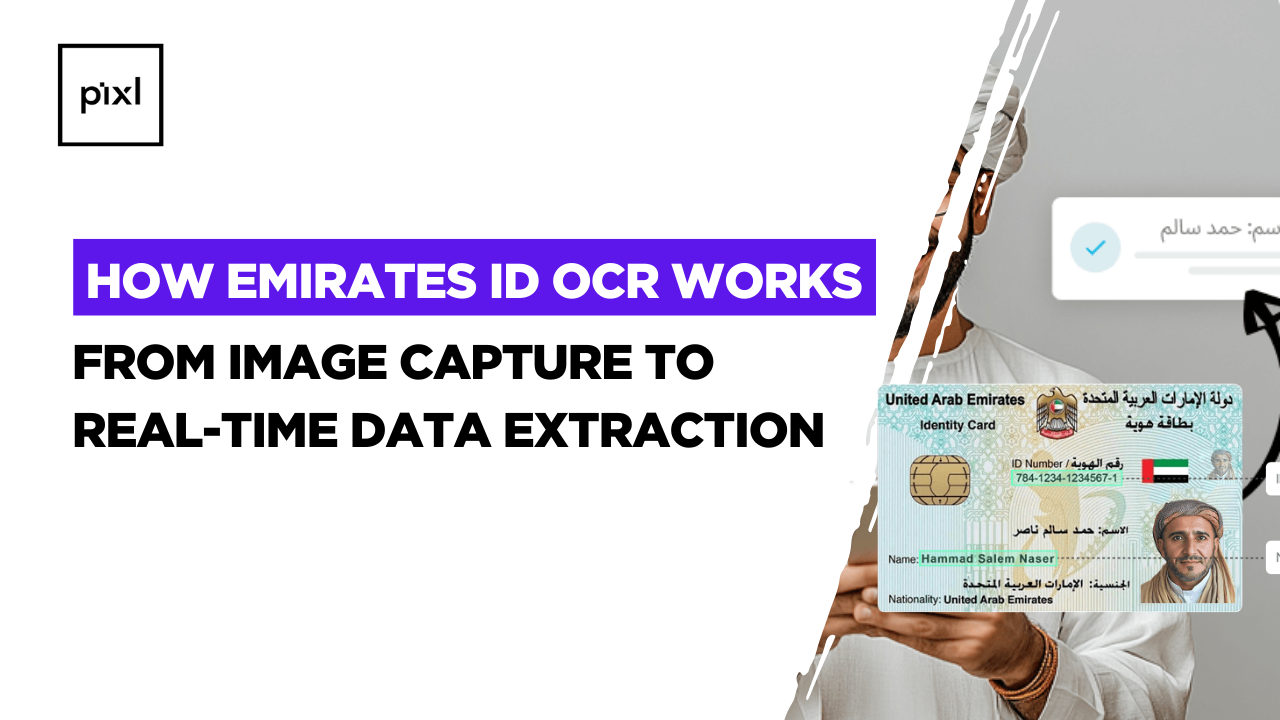
Emirates ID OCR has become a critical technology As UAE businesses digitize onboarding, compliance, and verification workflows . But many decision-makers still ask: How does Emirates ID OCR actually work?
This blog explains the end-to-end Emirates ID scanning process, from image capture to real-time data extraction, validation, and system integration without technical complexity.
How Emirates ID OCR Works step by step process
Step 1: Image Capture – Getting the Right Input
The first step in Emirates ID digitization is capturing a high-quality image of the ID card.
Best Practices for Image Capture
- Use a standard mobile camera or scanner
- Ensure proper lighting and minimal glare
- Capture the full Emirates ID card (front side)
- Avoid motion blur and shadows
Pixl.ai’s Emirates ID OCR solution is designed to handle real-world conditions, making it suitable for:
- Bank branches
- Retail counters
- Healthcare desks
- Government service centers
If you’re new to this topic, read our detailed guide on Emirates ID OCR Software: A Complete Guide to Automated Identity Verification in the UAE to understand the broader business and compliance context.
Step 2: OCR + AI Recognition – Extracting ID Data
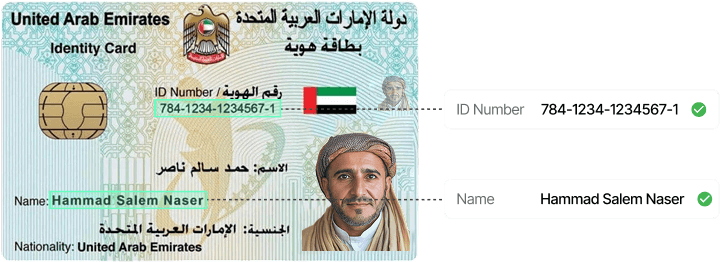
Once the image is captured, the system initiates OCR data extraction in the UAE context.
How AI OCR Works on Emirates ID
- The image is pre-processed (crop, align, enhance)
- AI models detect text zones specific to Emirates ID layouts
- Optical Character Recognition converts image text into digital data
Unlike generic OCR engines, AI OCR for UAE IDs is trained on:
- Official Emirates ID formats
- Government-issued fonts
- Structured identity fields
This ensures high accuracy even at scale.
Step 3: Arabic Text Processing & Bilingual Recognition
Emirates IDs contain both Arabic and English text, making language handling a critical step.
Why Arabic OCR Matters
- Arabic script structure differs from Latin text
- Directionality (right-to-left) must be preserved
- Transliteration errors can cause compliance issues
Pixl.ai’s OCR engine supports advanced Arabic text processing, enabling:
- Accurate name recognition
- Correct nationality and demographic extraction
- Consistent bilingual data mapping
This is especially important for UAE identity verification and cross-checking records during KYC or certificate attestation.
Step 4: Data Validation & UAE Compliance Checks
After extraction, the data goes through validation and verification layers.
What Gets Validated
- Emirates ID number format
- Expiry date status
- Field consistency
- Image authenticity indicators
This step supports UAE KYC automation and helps organizations reduce:
- Manual errors
- Fraud risks
- Compliance violations
To understand how this aligns with AML and data privacy laws, refer to our sub-blog: Emirates ID OCR and UAE Compliance: Meeting AML & Data Privacy Requirements
Step 5: Integration with Business Systems
Once verified, the extracted data is seamlessly pushed into business applications.
Integration Options
- REST APIs
- SDKs
- Web-based dashboards
Pixl.ai’s Emirates ID scanning software integrates easily with:
- Core banking systems
- CRM & ERP platforms
- Hospital management systems
- Government portals
This enables real-time onboarding, faster approvals, and consistent digital records.
Where This Workflow Is Used Across Industries
This Emirates ID OCR workflow powers multiple real-world use cases:
- Digital bank onboarding
- Retail customer verification
- Healthcare patient registration
- Certificate attestation in Dubai & UAE
- Airport and travel identity checks
For industry-specific examples, explore: Top Use Cases of Emirates ID OCR Across UAE Industries
Why Pixl.ai’s Emirates ID OCR Stands Out
Pixl.ai’s solution is purpose-built for the UAE ecosystem, offering:
- High-accuracy Arabic + English OCR
- Real-time extraction in seconds
- Cloud or on-premise deployment
- Secure, compliance-ready architecture
👉 Learn more about the product here: Pixl.ai Emirates ID OCR Solution for the UAE
Conclusion
Understanding how Emirates ID OCR works helps businesses make informed decisions about automation, compliance, and scalability. From image capture to real-time system integration, OCR transforms identity verification into a fast, reliable, and secure process.